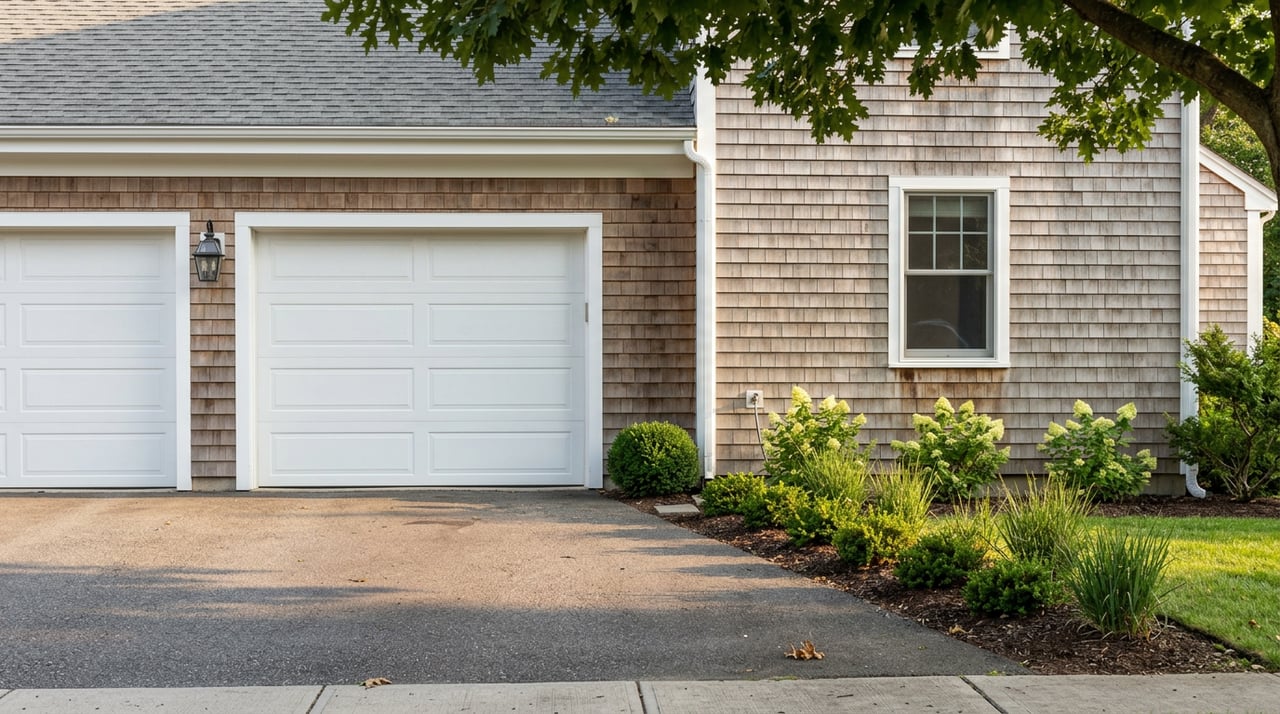
Most Mount Sinai sellers assume the septic system is a line item their attorney handles after contract. That assumption used to be safe. Two changes, one at the state level in 2024 and one at the county level in 2021, have quietly turned Question 36 on the disclosure form into the single most consequential paragraph in a North Shore listing where the home sits on a private cesspool.
If your house was built before Mount Sinai's newer subdivisions went in, and the sanitary line still runs to a block cesspool in the side yard, the way you prepare for a sale in 2026 is not the same as the way your neighbor prepared in 2019. Here is what actually changed, and where the friction lands.
The disclosure line that used to be blank
For twenty-two years, New York sellers could hand the buyer a $500 credit at contract and skip the Property Condition Disclosure Statement entirely. Downstate attorneys treated it as standard practice. That option is gone. On March 20, 2024, the amended Property Condition Disclosure Act eliminated the $500 opt-out and expanded the form to 56 questions. The PCDS is now mandatory for most one-to-four family sales, and a seller who knowingly answers incompletely loses the statutory protection the Act was designed to give them.
Question 36 is the one that matters here. It asks the seller to circle the sewage system type, then write in the age, the date last pumped, the frequency of pumping, and any known material defects. Effective July 1, 2025, the amended form added a reference directing buyers to the NYS Department of Health's septic operation and maintenance pamphlet under General Business Law section 396-s. The paragraph looks small on the page. It is not. It is the reason buyer's counsel now asks for pump records at attorney review, and it is the reason "Unknown" is a dangerous answer for a system nobody has laid eyes on in fifteen years.
New York case law has already established that a broker's knowledge of a septic defect can be imputed to the seller. In Kier v. Wilcox, a seller was held liable for damages after failing to revise the PCDS once the listing broker learned the leach field encroached on a neighbor's lot. Silence, once someone on your side of the deal knows, is not a defense.
What the sanitary code does when your cesspool fails mid-deal
The second change is local. Mount Sinai is largely unsewered, and the housing stock skews older, which means a meaningful share of the hamlet still runs on block cesspools installed decades ago. Suffolk County's sanitary code no longer lets you replace one with another.
Since July 1, 2019, a failing cesspool in Suffolk County must be replaced with at least a conventional septic system with a tank and leaching structure. Since July 1, 2021, Chapter 839 of the Suffolk County Code requires an Innovative and Alternative Onsite Wastewater Treatment System, or I/A OWTS, for new single-family construction and for "major reconstruction," which the code defines as any renovation where the cost exceeds 50 percent of the home's market value. Adding bedrooms that push the total above five triggers the same requirement.
The nitrogen-reducing I/A systems remove 70 to 90 percent of nitrogen before wastewater reaches groundwater. They also cost more. Installed pricing across Suffolk vendors in 2026 runs between $19,000 and $40,000 for an I/A OWTS, against $10,000 to $20,000 for a conventional septic. Both require an SCDHS permit, which runs $200 to $500 and takes two to four weeks to process, and neither can be backfilled until a county inspector signs off. I/A OWTS installations also carry a mandatory annual service contract, typically $200 to $500 a year, that transfers with the property.
The functional consequence for a Mount Sinai seller: an existing cesspool that is working today is grandfathered and can stay. A cesspool that fails during the buyer's inspection cannot be patched or swapped for a like system. The floor is a conventional septic, and the ceiling depends on what the buyer plans to do with the house.
The grant nobody claims during a sale
Suffolk County and New York State together fund grants of up to $30,000 for eligible homeowners installing an I/A OWTS through the Septic Improvement Program. Preferential scoring goes to parcels in environmentally sensitive areas, which for Mount Sinai includes properties draining toward the harbor and Cedar Beach. The grant is paid directly to a vendor on the county's approved installer list after installation is complete.
There is a rule inside the program that catches sellers off guard. The grant must be approved before work begins. A homeowner who discovers a failed cesspool during a two-week inspection window, calls the first available contractor, and starts excavation to save the deal has just forfeited every dollar of that grant. The application, the vendor selection from the approved list, the site review, the priority scoring, all of it has to happen first. During a live transaction, there is rarely time.
This is the specific friction most sellers do not see coming. It is also the strongest argument for handling the wastewater question before the sign goes in the yard.
| Scenario | Seller's Likely Cost | Grant Access |
|---|---|---|
| Functioning cesspool, disclosed with pump history | $0 at closing | Not needed |
| Cesspool fails at inspection, conventional septic installed | $10,000 to $20,000 | Forfeited if work starts before approval |
| Buyer plans addition over 50% of value or a 6th bedroom | $19,000 to $40,000 for I/A OWTS | Available if applied for pre-listing |
| Pre-listing voluntary I/A OWTS upgrade | $19,000 to $40,000 gross, potentially net near zero | Up to $30,000 combined SIP and NYS |
Reading a Mount Sinai listing through Question 36
The neighborhoods inside Mount Sinai's 11766 boundary do not all carry the same wastewater profile. Homes in the Villages at Mount Sinai and the Gated Hamlet at Willow Creek Golf and Country Club were built newer, on modern septics, and generally sit closer to code as-is. Homes in Woodhull Manor and the older stretches near North Country Road often still run on original cesspools that predate the 2019 replacement rule.
If your house falls into the second group, your Q36 answers become part of the marketing. A seller who can write in a system installed in 2019, pumped last spring, with no defects, is telling every buyer's attorney a very short story. A seller who writes "unknown, unknown, unknown" is inviting a $10,000 to $25,000 negotiation the buyer's inspector will script for them.
The 2026 Mount Sinai median sale price sat near $770,000 with homes averaging 85 days on market, according to Redfin's March 2026 report. On a $770,000 sale, a $20,000 septic credit is 2.6 percent of price. On a home that already needs a kitchen refresh or a roof, the buyer will stack those numbers. The grant that could have covered most of the septic work is unreachable once the clock starts.
What to do before you sign a listing agreement
- Pull the SCDHS permit history for your address. If the county has no record of the current system, that fact belongs in your Q36 answer honestly and belongs in your pricing strategy before the sign goes up.
- Schedule a pump-out and a visual inspection now. A licensed hauler using the SHIP portal will document the system, and a video inspection of the leaching structure gives you a defensible answer to "any known material defects."
- If the system is at or past its service life, apply to the Septic Improvement Program before you list. The approval and installer selection take time. Doing it on your calendar is the only way to keep the up-to-$30,000 grant in reach.
- Confirm whether your parcel sits in a designated priority area on the SIP map. Priority parcels are scored higher and move faster.
- Ask your attorney to review the amended PCDS Question 36 answers with you before the listing agreement is signed, not after an offer is in hand.
FAQ
Does selling my Mount Sinai home force me to upgrade to an I/A OWTS? No. A functioning cesspool is grandfathered under Chapter 839 of the Suffolk County Code. Sale of the home, on its own, does not trigger mandatory replacement. Replacement is triggered by system failure or by a buyer's future project that qualifies as major reconstruction.
Can I still give the buyer a credit instead of filling out the PCDS? No. The $500 credit option was removed effective March 20, 2024. Except for a narrow set of exemptions such as sale by an estate, the PCDS is mandatory.
If my cesspool fails during the buyer's inspection, how long does a conventional septic replacement take? The SCDHS permit itself takes two to four weeks to process, and work cannot begin until approval is issued or be backfilled until the county inspects. A realistic timeline from discovery to a closable system is four to eight weeks, longer if soil conditions require a percolation test.
Do I have to disclose septic problems I fixed years ago? Question 36 asks for known material defects and system history. Prior repairs that were completed, permitted, and inspected are worth documenting in your answer. The risk is undisclosed active problems, not resolved ones.
Is there a way to preserve the SIP grant during a transaction? Only by applying and receiving approval before work begins. Emergency replacements ordered by an unapproved installer during an inspection window are not eligible.
Wastewater is the one question in a Mount Sinai listing where the seller who moves first pays the least. If you are thinking about a sale in the next twelve months and your home is on a cesspool or an older septic, the pre-listing conversation to have is not about staging or paint. It is about Q36 and the SIP calendar. Keith Dawson and the Dawson Realty Team can walk you through how a Mount Sinai listing gets priced and positioned when the septic question is already answered. Get a Free Home Valuation and start the conversation before the sign goes in the yard.